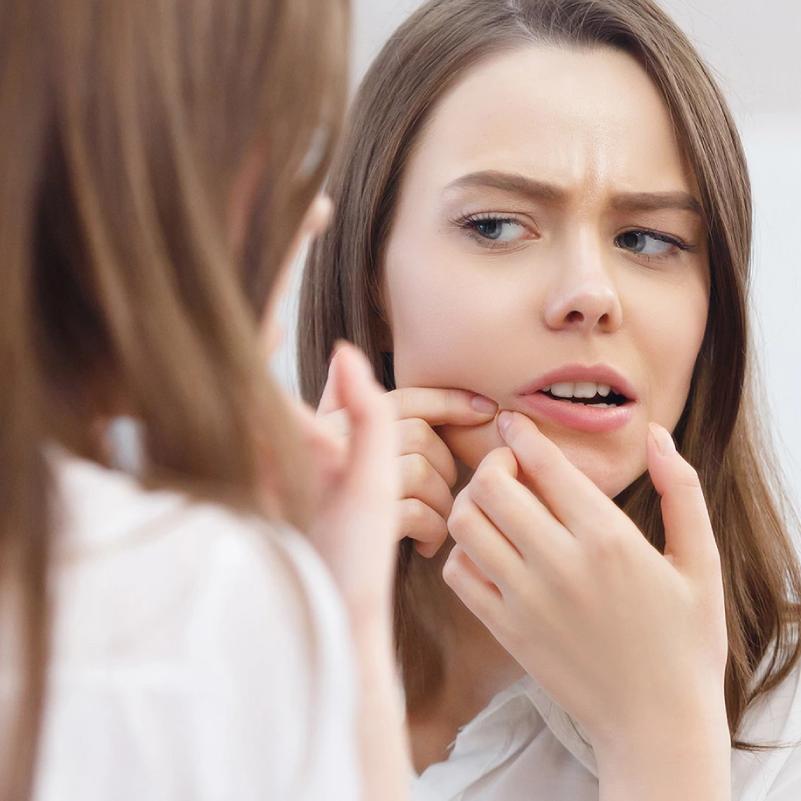
Acne and Acne Scars

Effective treatments with long-lasting results

Attending Doctors

Team der Hautärztinnen Dr. Anna Brandenburg in Hamburg – Dermatologische Privatpraxis für Hautgesundheit und Ästhetik.
Dr. med. Bianca Arsene
Specialist in Dermatology
Team der Hautärztinnen Dr. Anna Brandenburg in Hamburg – Dermatologische Privatpraxis für Hautgesundheit und Ästhetik.
Dr. med. Anna Brandenburg
Specialist in Dermatology, Venereology, and Allergology

Acne and Acne Scars – Long-lasting Treatment Results

Especially on the face, acne and its aftereffects such as blackheads, pimples, and scars often affect self-confidence. Acne is caused by sebaceous follicles in the skin that, due to hormone-related overactivity, produce excessive sebum. Because of a concurrent keratinization disorder, this sebum cannot drain properly. As more sebum accumulates, the follicle ruptures, leading to painful inflammation. Bacteria then release fatty acids from these sebum deposits, which further intensify the inflammatory process. Together with you, we develop an effective, long-term treatment plan that not only helps prevent scarring but also restores your skin’s natural radiance. A cooling system ensures a low-pain treatment that is also suitable for darker skin types (up to skin type VI) with minimal risk.
Akne und Aknenarben

Your questions, our answers

What types of acne exist?

In addition to the classic forms of blackheads and acne with more or less pronounced inflammatory papules and pustules, there are various types and characteristics. These include acne caused by mechanical irritation (self-inflicted injuries), acne induced by medication, acne in infants, adult female acne, and “Mallorca acne,” which appears as a reaction to sunlight.
There is increasing evidence that diet plays a significant role. Foods with a high glycemic index (such as refined sugars, pasta, and white bread) and dairy products can raise insulin levels and increase the amount of insulin-like growth factor (IGF-1), which promotes sebum production and aggravates acne symptoms.
Androgens (male hormones that also play an important role in women’s bodies) stimulate the sebaceous glands. A high level of androgens (such as DHEA-S) leads to increased sebum production and acne development.
Absolutely! Drinking around 3.5 liters of water per day boosts the metabolism of skin cells, helping the body eliminate waste products more efficiently and allowing inflammation to heal faster.
Some oral contraceptives contain antiandrogens that reduce sebum production. Therefore, birth control pills can have a positive effect on hormonally induced acne.
After a thorough diagnosis of the underlying causes, we determine the most suitable cleansing and skincare routine and, if necessary, prescribe creams, antibiotics, or vitamin A derivatives. These accelerate healing and help prevent scarring. Complementary deep cleansing treatments by a trained medical beautician are also recommended.

A proper skincare routine includes a gentle cleansing gel morning and evening that regulates sebum without drying the skin. A tonic containing salicylic acid helps remove dead skin cells, while a non-greasy, moisturizing cream supports the skin barrier.


Important: Avoid frequent or aggressive exfoliation! Harsh peels can damage the skin and spread bacteria. Enzyme peels are a gentle alternative. Likewise, cleansing brushes are not recommended during active acne, as bacteria can multiply in the moist bristles. Make-up is fine, as long as it is oil-free.


And resist the urge to squeeze pimples! Squeezing only damages the follicle and pushes sebum deeper into the skin, resulting in painful inflammation and potential scarring. Instead, we recommend professional medical cleansing treatments with our experienced beauticians, who remove impurities safely and hygienically.

Aknenormin (isotretinoin) is the only medication proven to permanently reduce sebaceous gland activity, leading to long-term improvement in severe acne. Treatment should begin before scarring occurs.


The tablets are taken once daily with a fatty meal. When monitored by an experienced dermatologist, treatment is safe. However, it can make the skin dry and more sensitive to sunlight, so regular blood tests are necessary during therapy.


Important: Pregnancy must be avoided during treatment and for one month after its completion, as the medication can cause birth defects. After treatment, there is no increased risk of malformation, and fertility is not affected.
Table of Contents
Additional Services
Haarausfall- und Kopfhauterkrankungen
Hair and Scalp Diseases
Neurodermitis, Ekzemen und Juckreiz
Neurodermatitis Eczema Itching
Geschlechtskrankheiten
Sexually Transmitted Diseases
Your Skin in the Best Hands

Doctors with Heart and Experience

Holistic Dermatology

Modern Dermatology & Aesthetics

We Are Here for You

Heilwigstraße 33, 20249 Hamburg